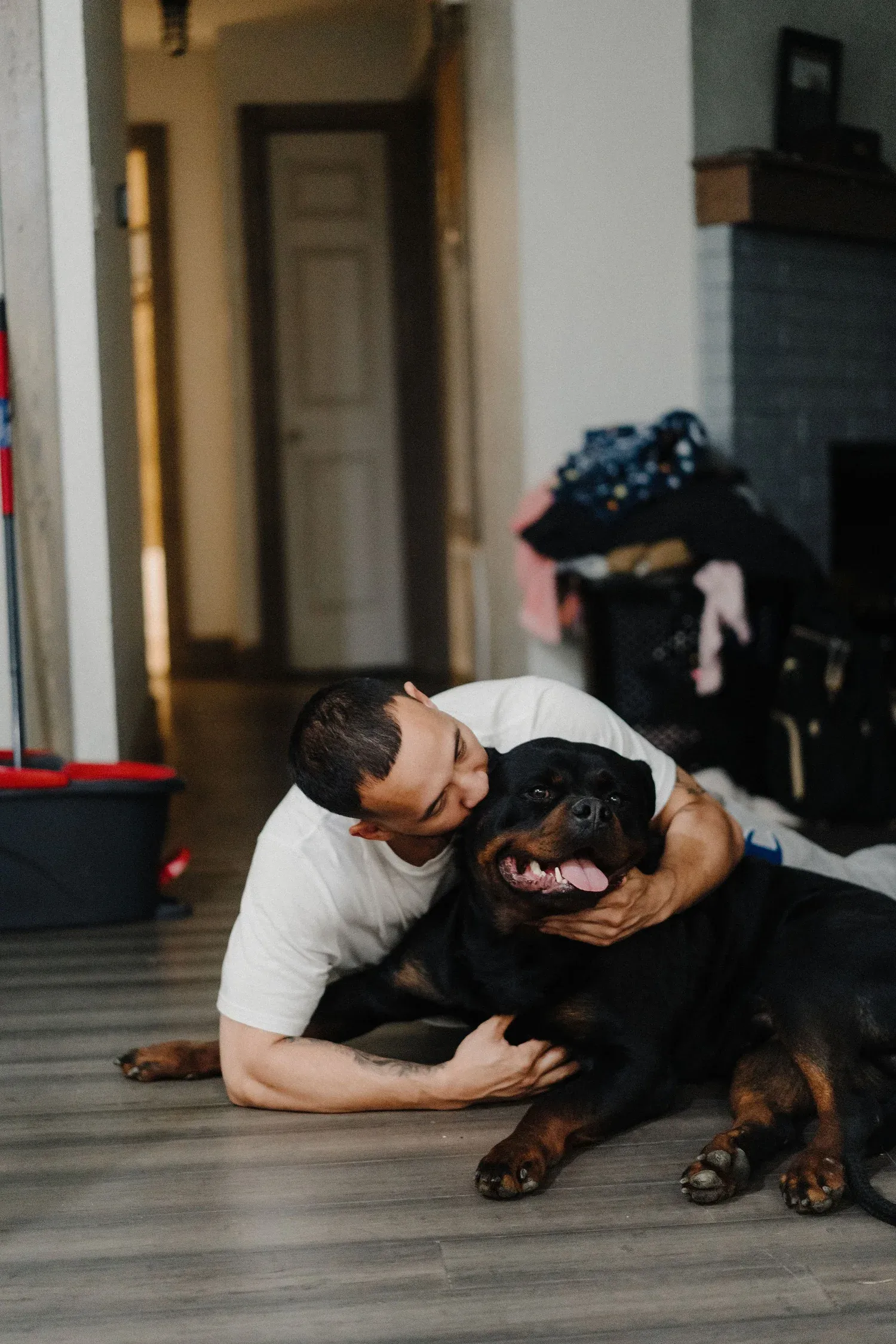
German vs American Rottweiler: What's Really Different
DN Rottweilers
AKC Breeder of Merit, OFA Health Testing, 10+ Years Experience
Spend an afternoon shopping for a Rottweiler and the word "German" is everywhere. German Rottweiler. German bloodline. Imported from Germany. It is the most-used word in Rottweiler marketing in the United States, and it is also the most abused.
We breed Rottweilers in Rowlett, Texas, on European lineage proven through the German working-dog system. So this is not a pitch for a passport. Here is what "German" and "American" actually tell you about a Rottweiler, what they do not, and the one difference that should decide your purchase — which is not the one most breeders are selling.
One Breed, One Standard — Start Here
Before any comparison means anything, lock in the foundation: there is only one Rottweiler breed. The Fédération Cynologique Internationale recognizes a single Rottweiler standard, FCI Standard N° 147, with Germany as the country of origin and the ADRK (Allgemeiner Deutscher Rottweiler-Klub), founded in 1907, as the breed's parent club. The American Kennel Club writes its own version of the standard, but it describes the same dog.
So "German Rottweiler" and "American Rottweiler" do not name two breeds. They name two registries, and the two breeding cultures that grew up around them. That distinction is the entire comparison, and everything below is the detail.
Key takeaway: Same breed, same blueprint. What differs is which rulebook gated the breeding — and how strict that rulebook is.
What "German Rottweiler" Actually Means
Used honestly, "German Rottweiler" means a dog bred in Germany under ADRK rules, or one whose pedigree traces to that system.
The ADRK does not suggest best practices — it mandates them. Before a Rottweiler can be bred under ADRK registration, it must pass a breed suitability test covering conformation and temperament, and its hips and elbows must be x-rayed and graded. The culture grew out of police and sport work, so stable nerve and trainability under pressure are expected, not optional. The result is a dog selected for the whole package — structure, temperament, and health — all gated before a litter is ever legal.
What "American Rottweiler" Actually Means
"American Rottweiler" means a dog bred under the AKC breed standard, which registers the breed and describes what the dog should look like.
The difference is not the standard — it is what the system requires. The AKC does not mandate hip grading, a temperament test, or a breed survey before a dog is bred. Plenty of American breeders do all of it anyway: OFA hips and elbows, cardiac and eye clearances, a JLPP DNA test. But it is their choice, not a gate the registry enforces. That single fact is the source of the variability people notice in American-bred Rottweilers — the floor is lower, even though the ceiling is just as high.
The other visible American legacy is the docked tail, which deserves its own section.
The Tail: The One Difference You Can Actually See
Most "German vs American" differences are tendencies you can argue about. The tail is not.
Germany banned tail docking in the late 1990s, and the ADRK standard now calls for a natural tail. So a Rottweiler bred in Germany — or imported from it — carries a full, undocked tail. In the United States, docking was the tradition and the AKC once expected it; many American-bred Rottweilers are still docked, though it is no longer required.
Size, Head, and Build: Tendencies, Not Rules
The internet will tell you German Rottweilers are bigger. The standard says otherwise — it is identical for both, with the same height range and the same call for substance. What is real is a difference in breeding emphasis, and it shows up as a tendency, not a guarantee.
| Trait | German tendency | American tendency |
|---|---|---|
| Build | Stockier, broader, more bone | Sleeker, leaner, racier |
| Head | Broad, deep, pronounced | Strong but often less massive |
| Tail | Natural (undocked) | Often docked |
| Selected for | Structure, temperament, work — gated by ADRK | Conformation; health left to the breeder |
| Size | 80–135 lb, by selection not nationality | 80–135 lb, by selection not nationality |
Temperament: What the Breeding Culture Selects
Both, when well bred, should be confident, calm, and trainable. A nervous or sharp Rottweiler is wrong regardless of the registry on its papers.
The difference is consistency. Because the German system tests temperament before breeding, German lines tend to be more predictable dog to dog. American lines, with no required temperament gate, vary more — a superb American breeder produces rock-solid dogs, but the absence of a system-wide filter means the range is wider. That is a statement about the system, not a knock on American dogs.
Health Testing: The Difference That Actually Matters to You
Strip away the marketing and one structural difference is left standing — and it is the only one that touches your vet bills. In the German system, health testing is enforced. Under the AKC, it is chosen.
An ADRK pedigree means the system itself gated the breeding. An AKC pedigree means the individual breeder did — or didn't. So the buyer's job is the same either way: verify, do not assume.
OFA results are public and searchable by registered name at ofa.org. A breeder who tests hands you the numbers in one message. We break down the same health questions for the European show scene in our German vs Serbian Rottweiler guide.
Which One Should You Buy?
Judge the breeder, not the passport. A health-tested American line from a breeder you can stand in front of beats an untested "German import" you met in a photograph, every time.
If you want the strictest documented gate on temperament and structure, German and ADRK lineage gives you that — and the natural tail to go with it. If you want a specific look or a breeder close to home, a serious American program working European bloodlines gives you the same dog with a contract you can actually enforce. What you should never do is pay extra for the word "German" with no paperwork behind it.
If you are weighing the European labels more broadly, our German vs Serbian Rottweiler comparison covers the show side, and our types of Rottweilers guide lays out every label in one place.
How Our Program Fits
This comparison lives in one pedigree at our house.
Our stud, Jon Jon, carries European import lineage — the show-type structure — and he was then proven the German way, earning his BH and IPO1 working titles through the German sport system. His health results are published and verifiable: hips HD-A, elbows ED-0, JLPP clear. German-system proof, documented health, raised in our home in Rowlett, Texas. That is what "European lines" should mean — titles and test numbers, not just a word in an ad.
We run a deliberately small program: two to three litters a year, every puppy raised in our home. Puppies are $3,500 on limited registration and $4,000 with full AKC breeding rights. See our German Rottweiler puppies in Texas page, browse available puppies, or join the waitlist for the next litter.
Frequently Asked Questions
Is a German Rottweiler a different breed from an American Rottweiler?
No. There is one Rottweiler breed, governed by FCI Standard N° 147 with Germany as the country of origin. "German" and "American" describe the registry and breeding culture behind a dog — the ADRK system versus the AKC — not separate breeds.
Are German Rottweilers bigger than American Rottweilers?
Not by standard. The written standard, height, and weight range are identical for both. German lines often look stockier because German breeding emphasizes bone and substance, but size is the result of individual breeding choices, not nationality.
Do German Rottweilers have tails?
Yes. Germany banned tail docking in the late 1990s, and the ADRK standard now calls for a natural tail. A Rottweiler bred in or imported from Germany carries a full, undocked tail, while many American-bred Rottweilers are still docked.
Is a German Rottweiler born in America still a German Rottweiler?
By lineage, yes. A dog from German or ADRK bloodlines is "German" in pedigree no matter where it is whelped — the label describes the breeding behind the dog, not its birthplace. The honest way to phrase it is "German lines," and the paperwork is what proves it.
Which is better, a German or American Rottweiler?
Neither label makes a dog better. A German pedigree guarantees the breeding passed the ADRK's mandatory health and temperament gates; an American pedigree leaves that to the breeder. A health-tested American dog easily beats an untested German one. Judge the testing and the breeder, not the country.
Are German Rottweilers calmer than American Rottweilers?
Often more consistent, because temperament testing is required before breeding in Germany. But calm is a property of the individual dog's parents and the breeder's selection, not of the registry. A well-bred Rottweiler of either kind should be confident and stable.
The Bottom Line
"German" and "American" are useful shorthand for two registries and the breeding cultures around them — one that enforces health and temperament testing, one that leaves it to the breeder. Neither label has ever tested a hip or raised a litter well. Find the tail if you want a clue, then do the real work: ask for certificate numbers, watch the breeder hand them over, and buy the dog whose health you can verify.
Want a Rottweiler that carries the documentation, not just the label?
Join the Waitlist → German Rottweiler Puppies in Texas →
Questions first? Call or text (945) 200-1939.
Sources: FCI Standard N° 147, ADRK breeding regulations, American Kennel Club (AKC), Orthopedic Foundation for Animals (OFA).
Related Articles
German Rottweiler vs Serbian Rottweiler: What the Labels Actually Mean
Same breed, two breeding cultures. What "German" and "Serbian" actually signal — head type, drive, health-testing culture, and real import costs for US buyers — from a Texas program built on both.
Rottweiler vs Dogo Argentino: The Ultimate Breed Comparison (2026)
A deep-dive comparison of the Rottweiler and Dogo Argentino covering origin, temperament, health, training, family suitability, protection ability, and cost of ownership — backed by data from AKC, OFA, PetMD, and breed-specific research.
Looking for a Rottweiler Puppy?
DN Rottweilers produces quality puppies from health-tested, champion bloodlines in Dallas, Texas.